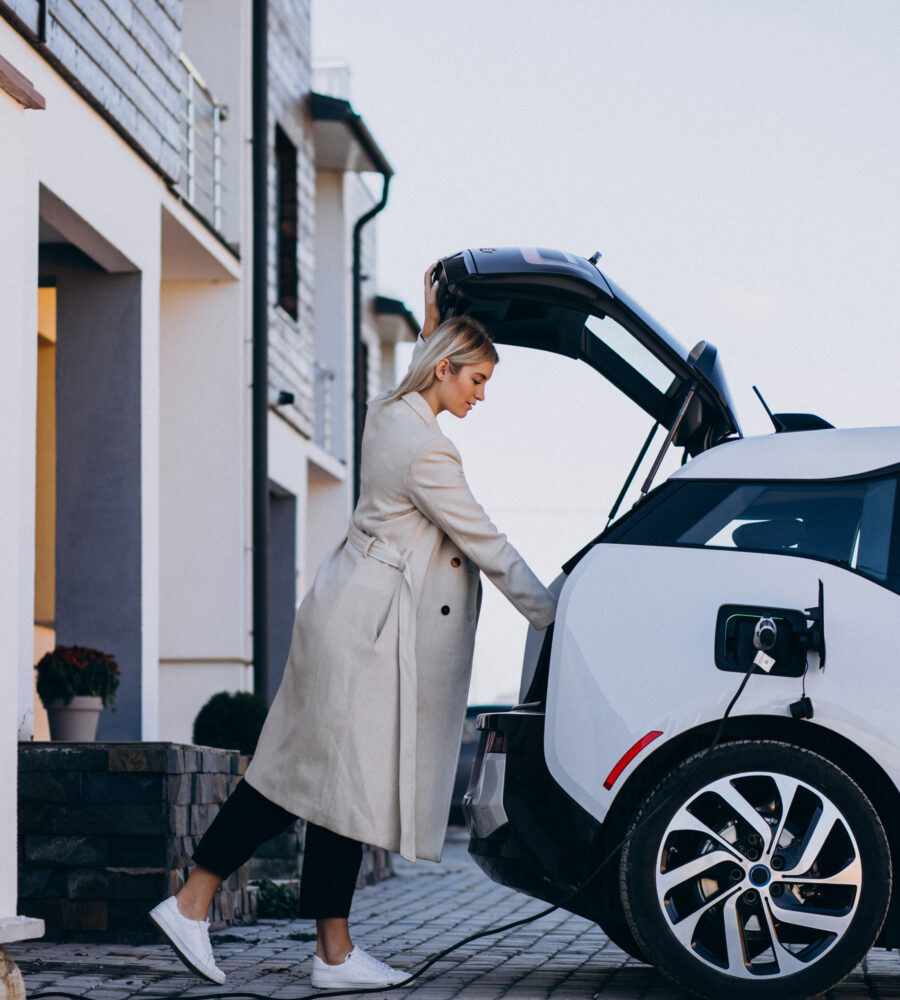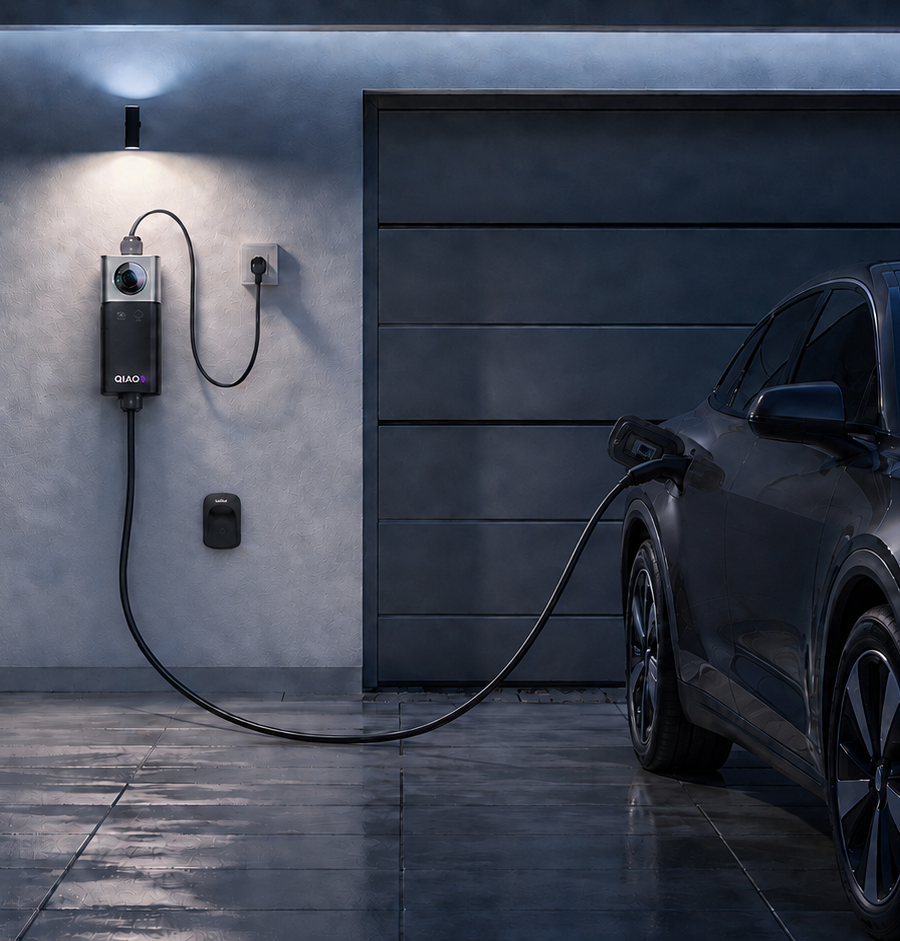

A wall-mounted charger is usually more convenient for homeowners with fixed parking and regular charging needs. A portable charger often suits renters, frequent movers, and drivers who want to use one charger at home and on trips. Some portable EV chargers can also sit in a wall holder for daily home charging, then be removed when needed elsewhere.
The right choice depends on your parking space, electrical supply, daily driving, and plans for the property. This guide compares the main factors so you can choose the setup that fits your routine.
Key Takeaways
- A wall-mounted charger usually offers the easiest permanent home setup.
- A portable charger gives renters, movers, and travelers more flexibility.
- Some portable chargers can stay in a wall holder at home and still travel with you.
In both cases, charging speed depends on the charger, electrical supply, and vehicle.
Portable vs. Wall-Mounted EV Chargers at a Glance
The main differences between portable and wall-mounted EV chargers involve mobility, placement, and long-term home use.
| Factor | Portable EV Charger | Wall-Mounted EV Charger |
| Mobility | Can be removed and taken to another location | Remains at one parking location |
| Home placement | Can sit in a wall holder or be stored after charging | Stays mounted near the vehicle |
| Charging power | Varies by model, outlet, and electrical supply | Varies by model and electrical supply; higher-power options are more common |
| Electrical connection | Plugs into a compatible outlet | May be plugged in or hardwired |
| Electrical work | May need a new outlet or dedicated circuit | Usually needs a dedicated circuit; may be plug-in or hardwired |
| Daily convenience | Easy to use when left in a home holder, but must be packed for travel | Always ready at the fixed parking space |
| Connected features | Available on some models | More often supports wider home energy integration |
| Best fit | Renters, movers, travelers, and multi-location users | Homeowners with fixed parking |
These are common differences, not fixed rules. Check each charger’s power, connection, vehicle connector, and functions before buying.
What Do Portable and Wall-Mounted Actually Mean?
Portable and wall-mounted describe how the charger is placed and moved, not its exact power or electrical connection.
Portable EV Chargers
A portable EV charger is a removable unit that usually connects to a compatible outlet. You can store it in your vehicle, use it at another property, or place it in a holder beside your parking space. Portable models range from lower-power chargers for household outlets to higher-power AC units that require a suitable dedicated outlet or circuit.
Wall-Mounted EV Chargers
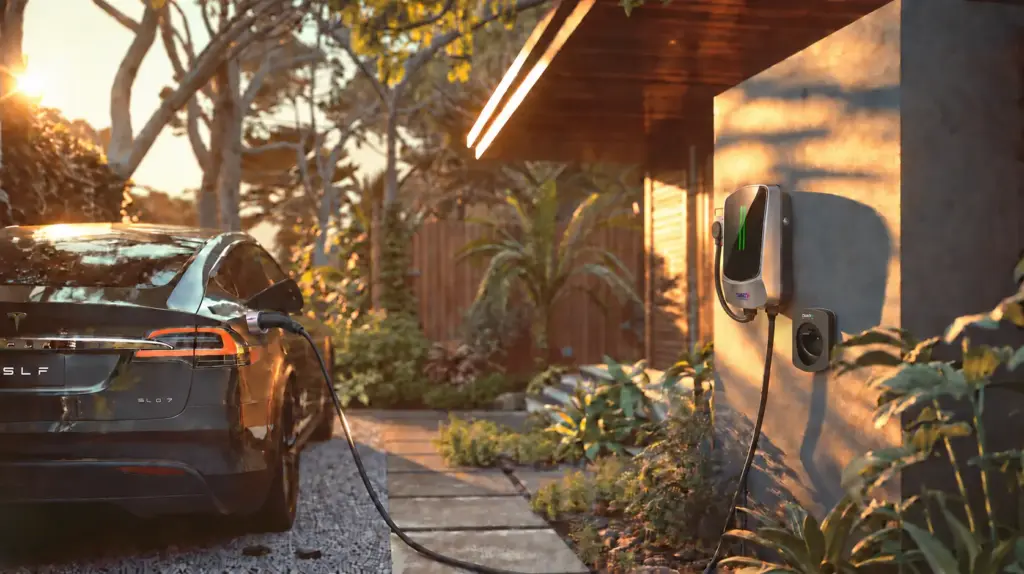
A wall-mounted charger stays in one location, often in a garage, carport, or outdoor parking area. It may plug into a dedicated outlet or connect through hardwiring.
Three terms often get mixed together:
- Portable Or Wall-Mounted: This describes whether you can move the charging unit.
- Plug-In Or Hardwired: This describes how the unit connects to the home’s electrical supply.
- Tethered Or Untethered: This describes whether the vehicle cable stays attached to the charger.
Placing a portable charger in a wall holder does not turn it into a wallbox. The charger remains removable and can still travel with the vehicle.
Is a Wall-Mounted EV Charger Always Faster?
No. A charger does not become faster simply because it is mounted on a wall. Actual AC charging power is limited by the home’s electrical supply, the circuit or outlet, the charger’s rated output, and the vehicle’s onboard charger. Load management can also reduce power when the home is using more electricity.
A 7 kW portable charger and a 7 kW wall-mounted charger can deliver similar speeds with suitable supplies and the same vehicle. Wall-mounted chargers often offer higher-power options, but portable chargers can also support higher-power AC charging when the model and electrical supply allow it.
Power should match the amount of energy you need to add while the car is parked. When comparing 7 kW, 11 kW, and 22 kW EV chargers, consider your vehicle’s charging limit, your home’s electrical supply, and your typical parking time.
Installation and Total Cost at Home
Total cost depends on the charger and the electrical work needed to support it. A lower charger price does not guarantee a lower total project cost.
Portable Charger Setup
A portable charger may use an existing outlet when the outlet, circuit, and plug suit the charging load. A higher-power model may still need a dedicated outlet, new circuit, or panel work. Not every nearby outlet can support regular EV charging.
Renters should check the lease and parking rules. Adding an outlet, circuit, or wall holder may require property approval.
Wall-Mounted Charger Installation
A wall-mounted charger needs a secure location near the vehicle. Cable distance, panel capacity, outdoor exposure, local codes, and permits can affect the work.
In the United States, the Department of Energy’s Charging Electric Vehicles at Home guidance recommends having an electrician confirm that the home has enough electrical capacity for the planned charger. Local rules, permits, and installation requirements vary by country and region.
Compare the full setup cost, including the charger, circuit, outlet, cable route, panel upgrades, labor, and permits. The final cost may also depend on whether you choose an indoor or outdoor EV charger installation, as the location can affect cable routing, weather protection, and installation work.
Which Is More Convenient for Everyday Use?
A wall-mounted charger is designed to remain in place for routine home charging. Some portable chargers can also be used as an everyday home charger when the model, outlet, and electrical supply are suitable. The main difference is how much handling each setup requires.
A wall-mounted charger stays ready beside the vehicle. You do not need to pack or reconnect it after a trip, and its fixed position can keep the cable organized.
A portable charger can stay in a home wall holder, then leave with you for a trip or move. Repeated plugging and unplugging can increase wear, so check the input plug and outlet for looseness or heat damage.
Safety depends on the equipment, circuit, installation, and how the charger is used. When choosing a portable EV charger, check that its plug, vehicle connector, cable length, and protection rating suit your vehicle and charging location. Avoid unapproved extension leads or adapters, and use outdoor-rated equipment in exposed areas.
Charging Controls and Home Energy Integration
Scheduling, app control, adjustable current, and energy records can be available on both portable and wall-mounted chargers. Check the exact configuration because functions vary by model.
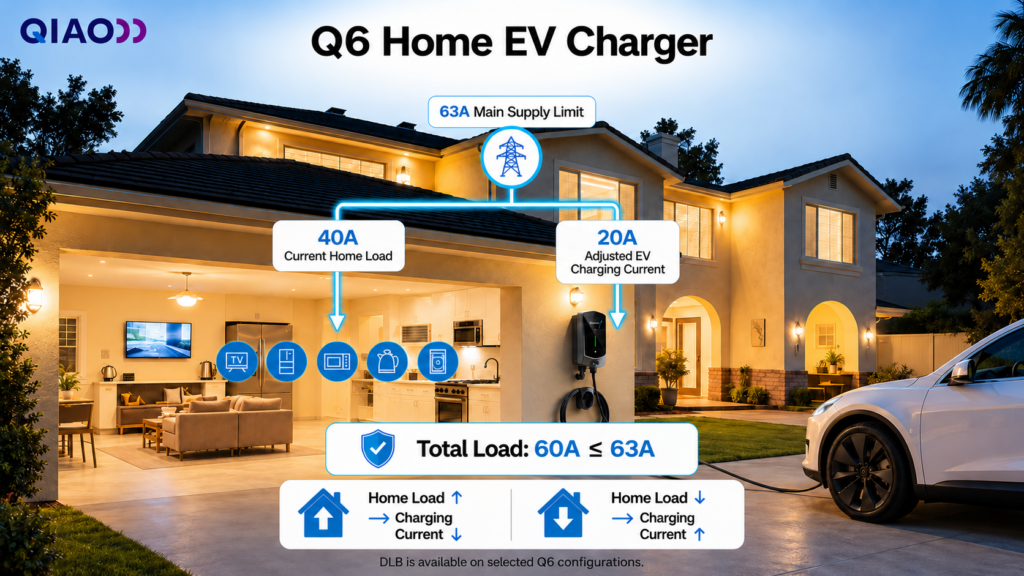
Wall-mounted chargers are more likely to support dynamic load balancing, solar charging modes, and deeper home energy integration. Dynamic load balancing adjusts charging power as other electrical loads in the home change. One configuration of the QIAO Q6 home EV charger supports this function. These features may help homes manage limited available capacity or make better use of rooftop solar, but they are not required for every driver.
Which Charger Fits Your Home and Driving Routine?
Choose the charger that matches your property, parking, and normal charging window.
| User Situation | Better Starting Choice | Main Reason |
| Homeowner with fixed parking | Dedicated wall-mounted | Ready for repeated daily use |
| Renter with a suitable outlet | Portable | Easier to remove when moving |
| Frequent mover | Portable | Does not remain with the property |
| One charger for home and travel | Portable with a home wall holder | Combines fixed storage with mobility |
| Low daily mileage | Either | Overnight energy needs may be modest |
| Long commute or irregular schedule | Often wall-mounted | A permanent higher-power setup may be easier to use |
| Solar or dynamic load balancing | Often wall-mounted | More home energy options are usually available |
| Two-EV household | Site-specific assessment | Available capacity and charging schedules set the need |
| Travel while another driver charges at home | Both | The home charger remains available |
Focus on the energy you need overnight. Low daily mileage may not require the highest power, while a long commute and short parking window may favor a permanent higher-power setup.
Drivers who plan to charge outdoors or while traveling should also consider outlet access, weather exposure, and plug compatibility.
Can One Portable EV Charger Cover Both Home and Travel?
Yes. A suitable portable EV charger can handle regular home charging and still be removed for travel. A compatible wall holder keeps the control unit and cable organized beside the parking space. You can then take the charger when you need to charge at another home or destination.
This setup may suit renters, frequent movers, and drivers who do not want two chargers. It still needs a suitable home circuit. Outlets used while traveling must match the charger’s plug, voltage, and current requirements.
A portable charger may not replace a wall-mounted charger if the home requires hardwiring, dynamic load balancing, solar integration, or a charger that other household members can use while you are away. For drivers who do not need these features, QIAO portable EV chargers for home and travel provide the flexibility to charge regularly at home and take the charger on the road when needed.
Six Questions to Ask Before Choosing
Answer these six questions before choosing a portable or wall-mounted EV charger:
- Do you own the property or have permission to make changes?
- Do you have a fixed private parking space?
- Is there a suitable outlet or dedicated circuit near the vehicle?
- How much energy do you usually need to add overnight?
- Will you move home or charge at other locations?
- Do you need load balancing, solar charging, or support for more than one EV?
Frequently Asked Questions
Yes, if the manufacturer allows it and the outlet and circuit are suitable for regular EV charging. Keep the control box supported and protect the connection from water or damage. Stop using the charger if the plug or outlet becomes loose, discolored, or unusually hot.
Usually not. They should share a circuit only when approved load-management equipment keeps the combined demand within the circuit limit. Do not connect both chargers through a basic splitter. Ask a qualified electrician to confirm the circuit capacity and local requirements.
You may be able to remove and reinstall the charger, depending on its ownership, design, and connection method. An electrician may need to disconnect a hardwired unit and make the old installation safe. Before moving, check who owns the equipment and remove any linked user account or access settings.
Conclusion
The better choice depends on how and where you charge. A wall-mounted charger is usually better for drivers who own their home, charge frequently, and want a permanent setup with less daily handling. A portable EV charger offers more flexibility for renters, frequent movers, travelers, or drivers who want one charger for both home and occasional use on the road.
Before deciding, consider your daily driving distance, parking time, vehicle charging limit, electrical supply, installation cost, and need for smart energy features. QIAO Charger offers both portable solutions and wall-mounted home EV chargers with different power levels, connection methods, and control options. Check the exact model configuration and local electrical requirements before making your final choice.