Table of Contents
Outdoor EV Charging Deployment Guide
Outdoor EV charging is becoming a standard requirement for commercial buildings, retail spaces, workplaces, and public areas. However, deploying chargers outdoors introduces challenges that go far beyond simply mounting hardware on a wall.
This article explains the core technical, environmental, and operational considerations for successful outdoor EV charging deployment—with a focus on commercial AC charging infrastructure.
Why Outdoor Deployment Requires a Different Approach
Unlike indoor installations, outdoor EV chargers are exposed to:
- Weather extremes
- Dust and moisture
- Temperature fluctuations
- Higher risk of physical impact and misuse
Without proper planning, these factors can lead to:
- Reduced charger lifespan
- Frequent downtime
- Safety and compliance risks
A well-designed outdoor deployment prioritizes durability, protection, and long-term reliability.
Environmental Protection (IP & Enclosure Design)
The first requirement for outdoor chargers is environmental resistance.
Key enclosure considerations:
- IP rating (typically IP54–IP65 for outdoor AC chargers)
- Sealed housing against rain and dust
- UV-resistant materials to prevent aging
- Corrosion-resistant finishes for coastal or humid regions
A properly rated enclosure ensures stable operation across seasons, reducing maintenance frequency.
Temperature Management and Thermal Stability
Outdoor chargers must operate reliably in both high and low temperatures.
Common thermal challenges:
- Direct sunlight causing enclosure heat buildup
- Cold weather affecting electronic components
- Continuous operation in summer peak hours
High-quality outdoor chargers integrate:
- Temperature sensors
- Intelligent power derating
- Heat-dissipation-oriented enclosure design
Thermal management protects internal components and maintains charging stability under real-world conditions.
Electrical Infrastructure and Load Planning
Outdoor charging points are often installed:
- Far from main distribution boards
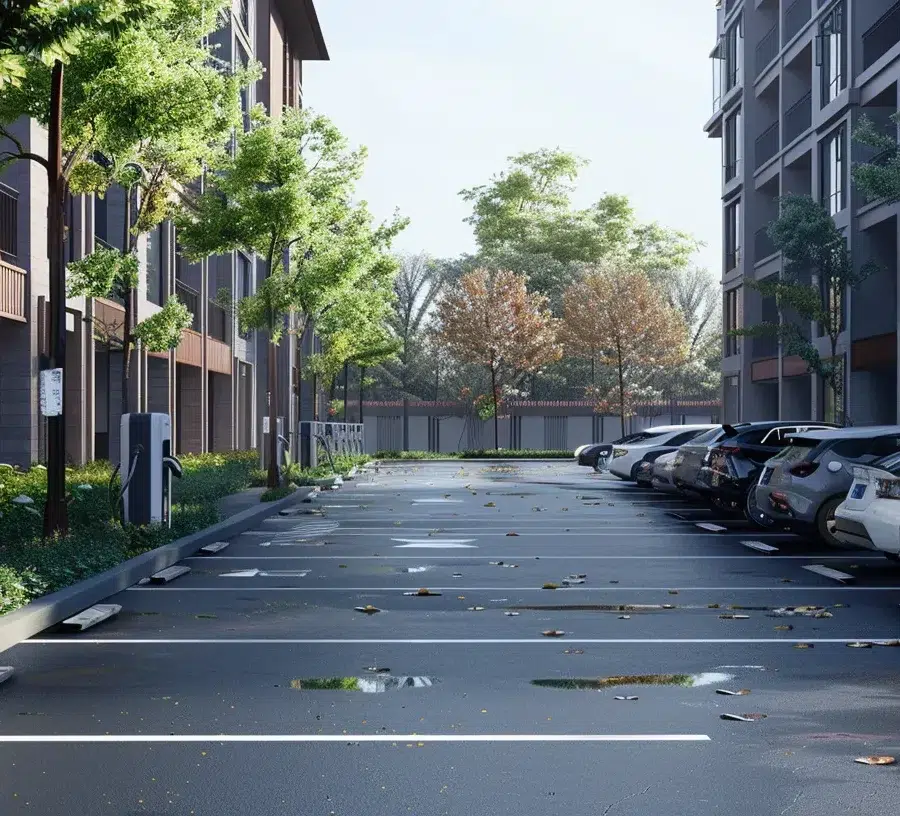
- In open parking areas
- Across multiple buildings or zones
This makes power planning critical.
| Deployment Factor | Impact |
| Cable length | Voltage drop risk |
| Shared feeders | Need for load balancing |
| Grid capacity | Limits charger count |
| Expansion plans | Require scalable design |
Dynamic load management (DLM) is frequently essential for outdoor commercial sites.
Mounting, Installation, and Physical Protection
Outdoor chargers face higher exposure to:
- Accidental impact (vehicles, carts)
- Vandalism
- Improper cable handling
Recommended practices include:
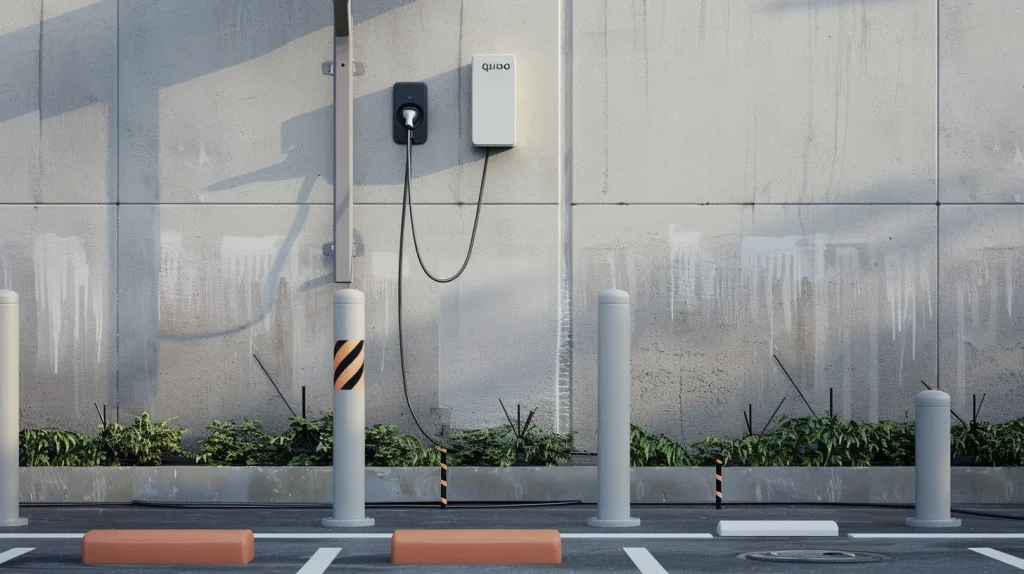
- Wall-mounted installation at controlled height
- Protective bollards in parking areas
- Reinforced mounting surfaces
- Clear cable routing and storage
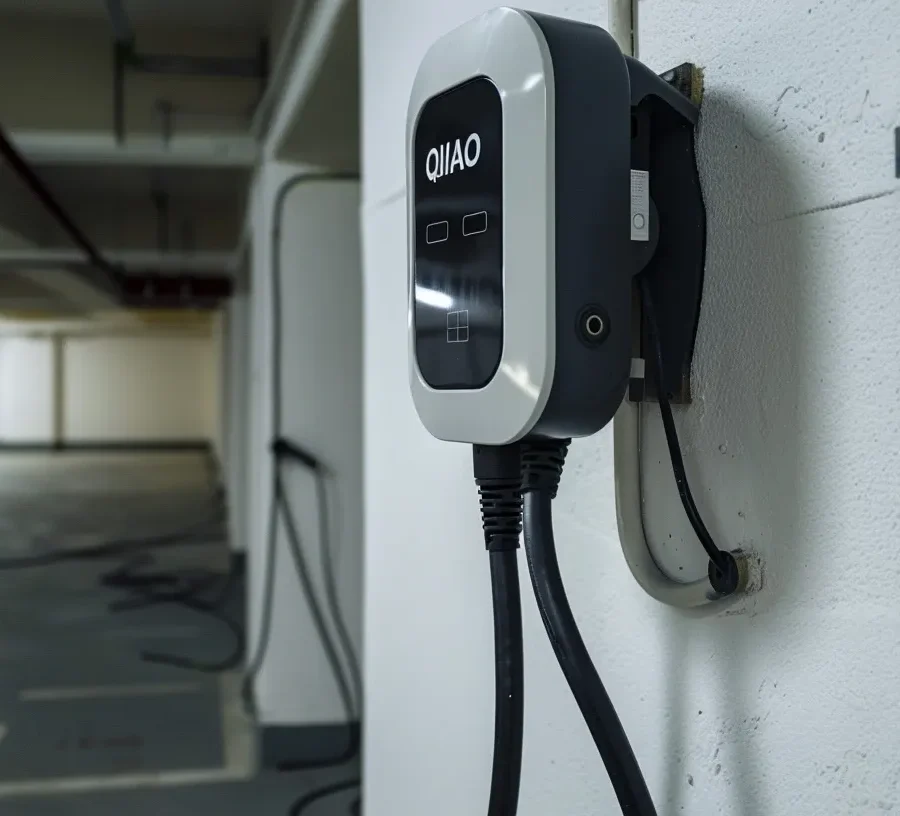
Compact wall-mounted AC chargers reduce physical risk compared to large floor-standing units.
Connectivity and Remote Monitoring
Outdoor chargers rely heavily on remote management.
Reliable outdoor deployment requires:
- Stable network connectivity (Ethernet, Wi-Fi, or 4G)
- OCPP-based backend integration
- Remote diagnostics and fault alerts
- OTA firmware update capability
Without remote visibility, outdoor chargers quickly become operational blind spots.
Safety and Compliance Requirements
Safety standards are stricter for outdoor environments.
Typical requirements include:
- Residual current protection (AC + DC leakage)
- Ground fault detection
- Surge protection (lightning-prone areas)
- Compliance with local electrical codes
Safety systems must function independently and automatically, even in harsh conditions.
Outdoor Deployment Checklist (Commercial AC Chargers)
| Area | Key Requirement |
| Enclosure | IP-rated, UV-resistant |
| Thermal | Temperature monitoring |
| Power | Load balancing support |
| Installation | Secure wall mounting |
| Connectivity | Remote management |
| Safety | Multi-layer protection |
This checklist helps ensure long-term uptime and regulatory compliance.
Why Outdoor AC Charging Is Ideal for Commercial Sites
For many commercial locations, AC charging is the most practical outdoor solution:
- Lower installation cost
- Easier grid integration
- Smaller equipment footprint
- Higher compatibility with long-stay parking
When deployed correctly, outdoor AC chargers deliver high reliability with lower total cost of ownership.
QIAO: Built for Reliable Outdoor AC Charging
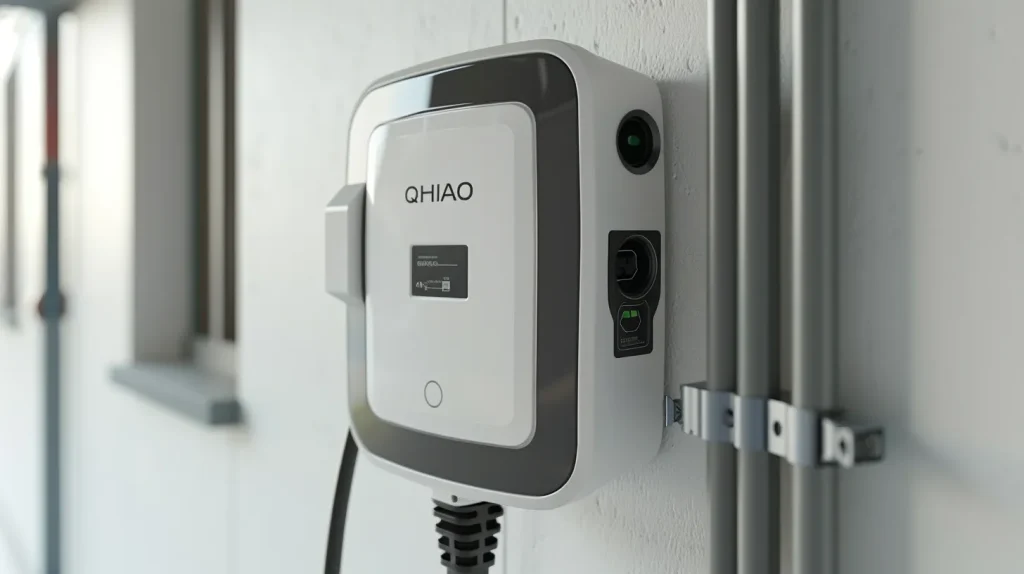
At QIAO EV Charger, we design commercial-grade AC EV chargers specifically for real-world outdoor deployment.
Our wall-mounted and portable AC chargers feature:
- Weather-resistant enclosures
- Compact, low-profile design
- Load balancing and OCPP readiness
- Multi-layer safety protection
- Reliable operation in diverse outdoor environments
This makes QIAO chargers well-suited for retail, workplaces, public parking, hospitality, and fleet outdoor installations.