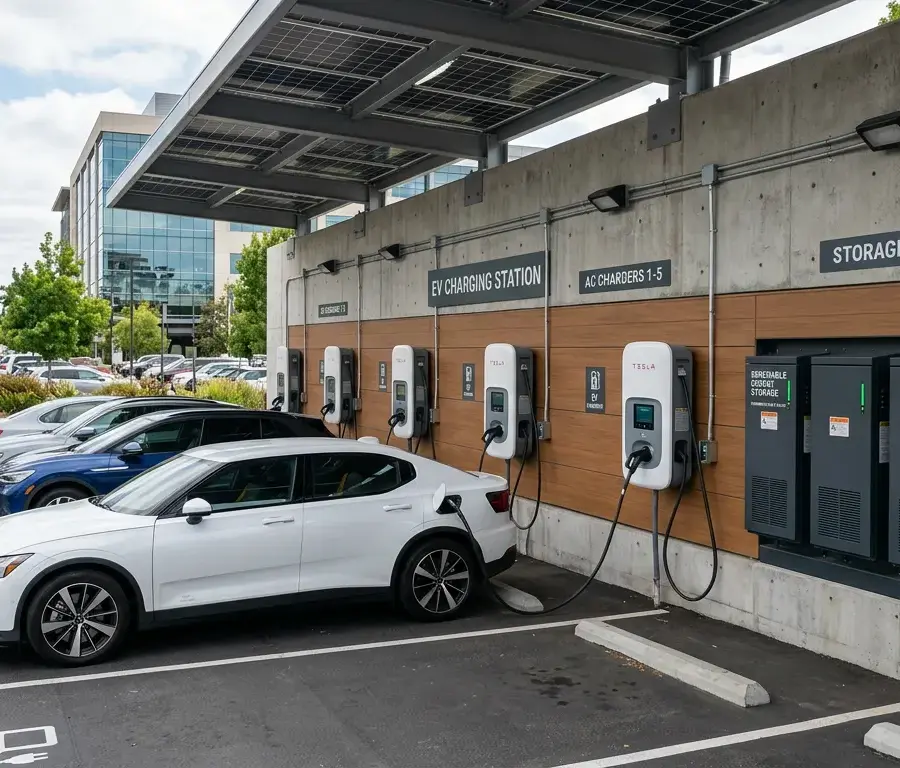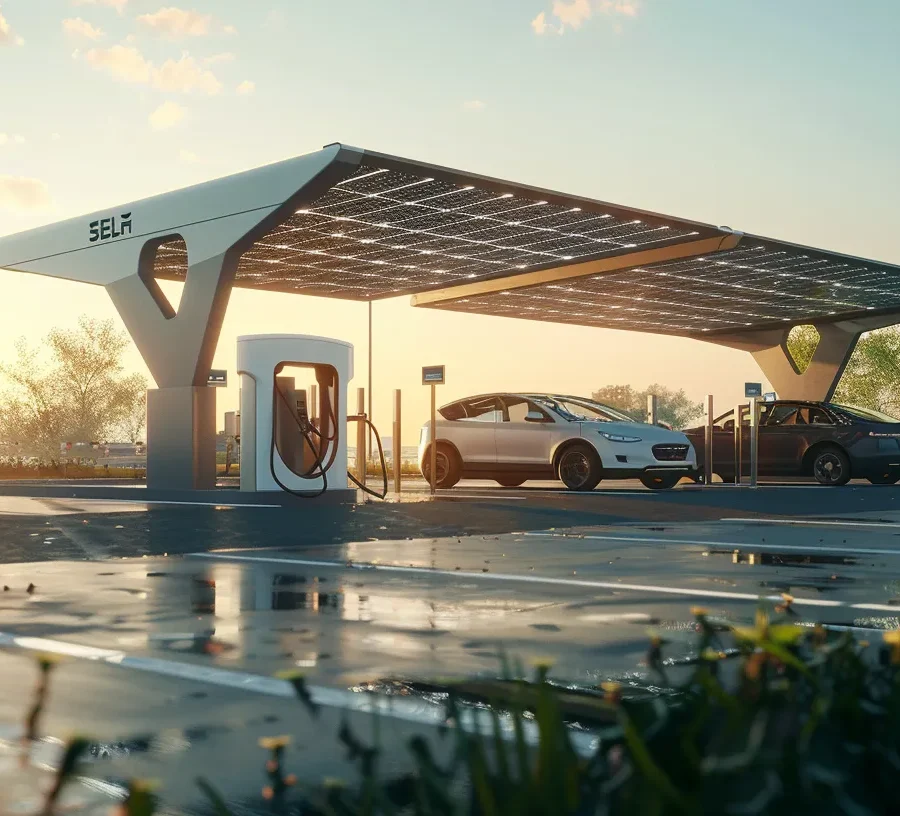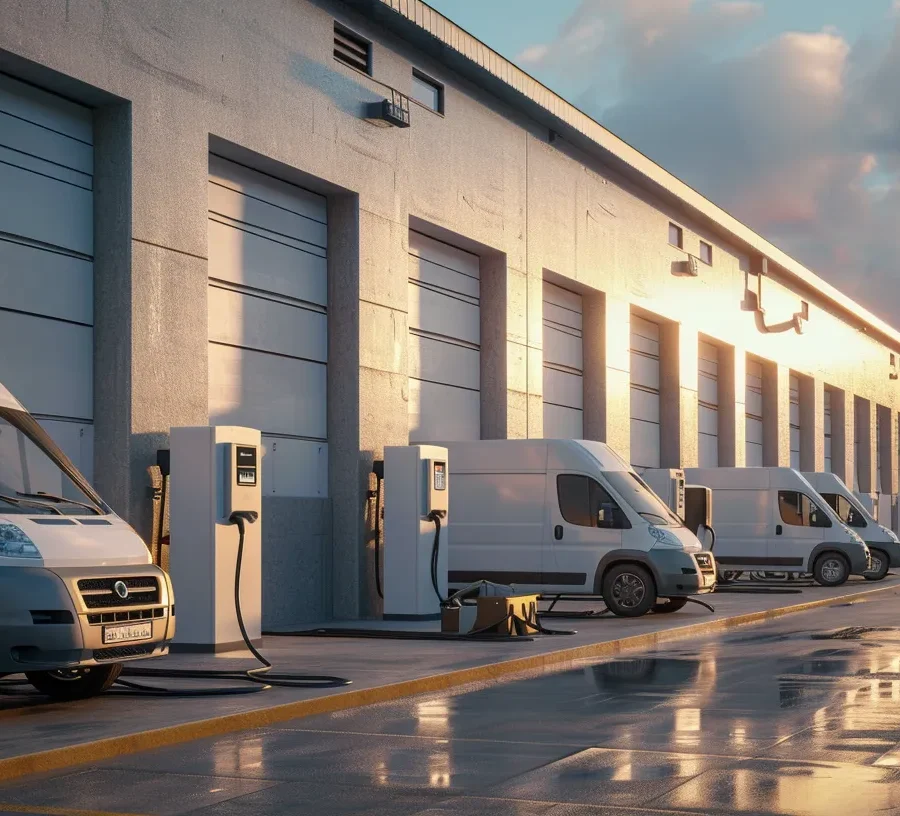

The EV charging industry is evolving beyond standalone chargers.
A major transformation is now underway:
The rise of distributed energy systems combining Solar, Energy Storage (ESS), and AC EV charging
This trend is reshaping how businesses think about:
- Energy consumption
- Charging infrastructure
- Electricity costs
- Grid dependency
Instead of relying entirely on centralized power grids, companies are increasingly adopting:
Localized, intelligent energy ecosystems
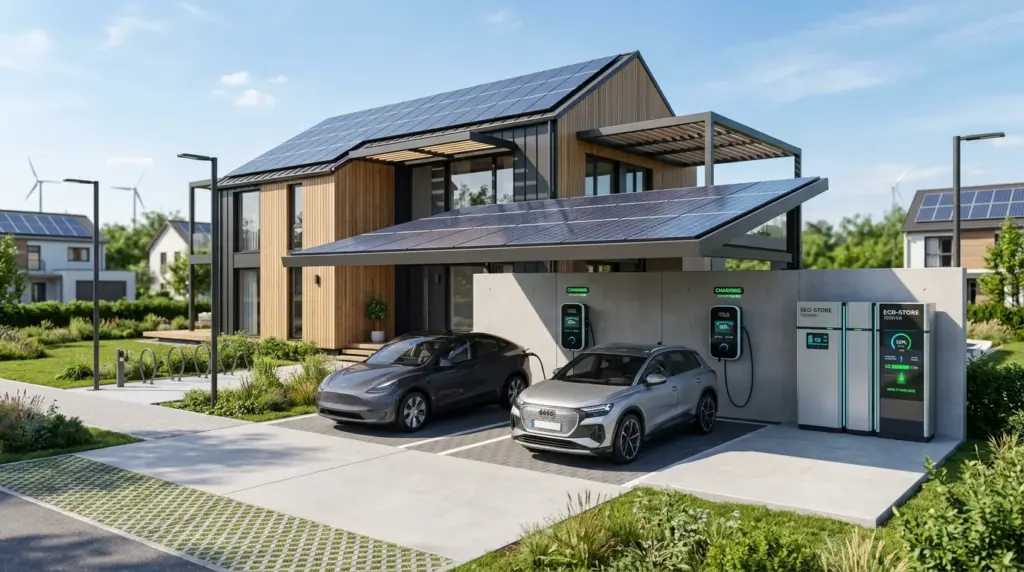
What Is a Distributed Energy System?
A distributed energy system typically combines:
- Solar photovoltaic (PV) generation
- Battery energy storage systems (ESS)
- AC EV charging infrastructure
- Smart energy management systems (EMS)
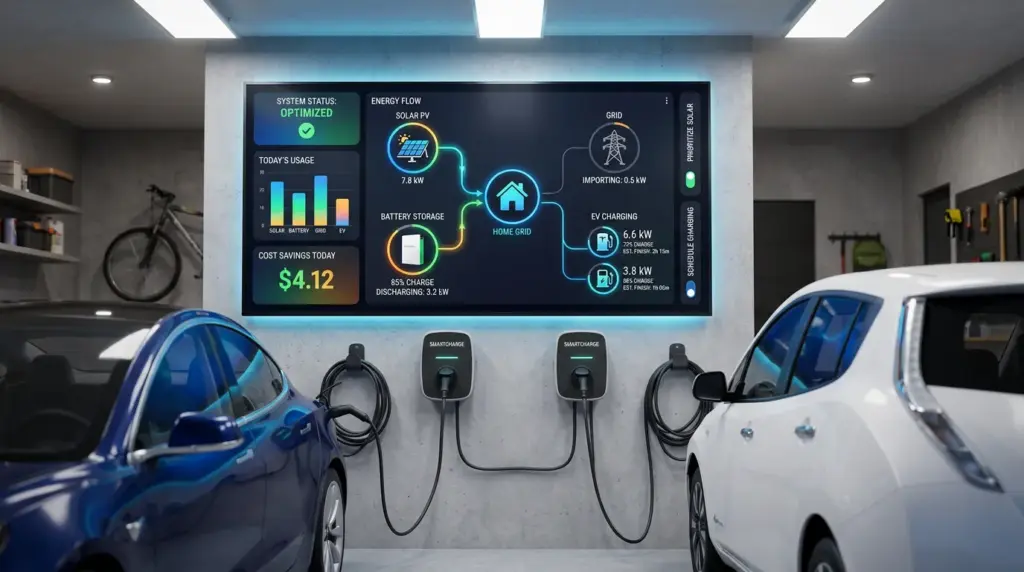
Typical Energy Flow
Solar → Storage → AC Charger → EV
Optional:
- Grid interaction
- Smart load balancing
- Demand response systems
Why Distributed Energy Is Growing
Several market forces are accelerating adoption.
1. Rising Electricity Costs
Businesses worldwide are facing:
- Higher electricity prices
- Increasing peak demand charges
Distributed energy helps reduce dependency on expensive grid electricity.
Source:
https://www.iea.org/reports/electricity-market-report-2024
2. Grid Capacity Constraints
In many regions:
- Existing grids struggle to support large-scale EV charging expansion
Especially in:
- Commercial buildings
- Fleet depots
- Urban areas
Source:
https://www.nrel.gov/transportation/electrification.html
3. Growth of Renewable Energy
Solar installation costs continue to decline globally.
According to the International Energy Agency:
- Solar PV remains one of the fastest-growing energy technologies.
Source:
https://www.iea.org/reports/renewables-2024
4. Smart Energy Management Technology
Modern EMS platforms enable:
- Intelligent charging scheduling
- Dynamic load balancing
- Energy optimization
This significantly improves system efficiency.
Why AC Charging Fits Distributed Energy Well
AC Charging = Lower Power Stress
Compared with DC fast charging:
| Factor | AC Charging | DC Charging |
| Power demand | Lower | Very high |
| Solar compatibility | Excellent | More difficult |
| ESS integration | Easier | Complex |
| Installation cost | Lower | Higher |
Insight:
AC charging is naturally suited for distributed energy systems.
The Role of Energy Storage (ESS)
Battery storage solves one of solar energy’s biggest challenges:
Intermittency
Solar generation varies by:
- Weather
- Time of day
- Season
ESS enables:
- Energy shifting
- Peak shaving
- Backup capability
Source:
https://www.energy.gov/eere/solar/solar-plus-storage
Key Benefits of Solar + Storage + AC Charging
1. Lower Operating Costs
Businesses reduce grid electricity consumption.
2. Peak Demand Reduction
ESS reduces expensive peak demand charges.
3. Improved Energy Resilience
Systems can continue operating during:
- Grid instability
- Power outages
4. Better ESG Performance
Distributed energy supports:
- Carbon reduction goals
- Sustainability reporting
Real-World Applications
1. Commercial Buildings
- Offices
- Business parks
Solar-powered AC charging improves property value and energy efficiency.
2. Fleet Charging Depots
Fleet operators benefit from:
- Predictable charging schedules
- Energy optimization
3. Hotels & Hospitality
Long parking durations align well with:
- Solar production cycles
- AC charging patterns
4. Residential Communities
Shared charging infrastructure becomes more energy-efficient.
Economic Trends
Solar Costs Continue Falling
According to the National Renewable Energy Laboratory:
- Solar and storage system economics continue improving.
Source:
https://www.nrel.gov/solar/market-research-analysis/solar-installed-system-cost.html
ESS Economics Are Improving
Battery prices have declined significantly over the last decade.
Source:
https://about.bnef.com/electric-vehicle-outlook/
Challenges of Distributed Energy Systems
1. Higher Initial Investment
Systems require:
- Solar panels
- ESS
- EMS integration
2. System Complexity
Energy optimization requires:
- Smart software
- Careful planning
3. Space Requirements
Commercial projects need adequate installation space.
Why Smart EMS Is Critical
Without intelligent management:
- Solar energy may be wasted
- ESS efficiency decreases
- Charging loads become unstable
EMS platforms optimize:
- Energy allocation
- Charging schedules
- Battery utilization
Future Trend: Microgrids & Energy Independence
The next stage is:
Localized microgrids
Future commercial sites may operate as:
- Semi-independent energy systems
- Self-optimized charging ecosystems
EV charging becomes part of a broader energy infrastructure strategy.
Why This Matters for B2B Buyers
1. Energy Costs Become Strategic
Electricity is becoming a major operational cost factor.
2. Charging Infrastructure Is Becoming Energy Infrastructure
Charging systems are no longer standalone hardware.
3. Distributed Energy Improves Long-Term ROI
Integrated systems offer:
- Better cost control
- Greater scalability
- Improved resilience
Where QIAO Fits In
At QIAO, we provide:
- AC EV charging solutions designed for distributed energy integration
Compatible with:
- Solar PV systems
- Energy storage systems
- Smart EMS platforms
Our solutions help businesses:
- Reduce operational costs
- Improve charging efficiency
- Build scalable energy ecosystems
Supporting the future of intelligent distributed charging infrastructure.
Key Takeaways
- Distributed energy systems are growing rapidly
- Solar + Storage + AC charging is highly compatible
- AC charging plays a central role in energy-efficient deployment
- Smart EMS platforms are essential for optimization
The future of EV charging is becoming decentralized, intelligent, and energy-integrated
FAQ
1. What is a distributed energy system?
A system combining local energy generation, storage, and energy consumption infrastructure.
2. Why is AC charging suitable for solar integration?
Because AC charging has lower and more stable power demand.
3. Is ESS necessary?
Not always, but it greatly improves energy flexibility.
4. What industries benefit most?
Commercial real estate, fleets, hotels, and residential communities.
5. Will distributed energy become mainstream?
Yes, especially as electricity costs and EV adoption rise.