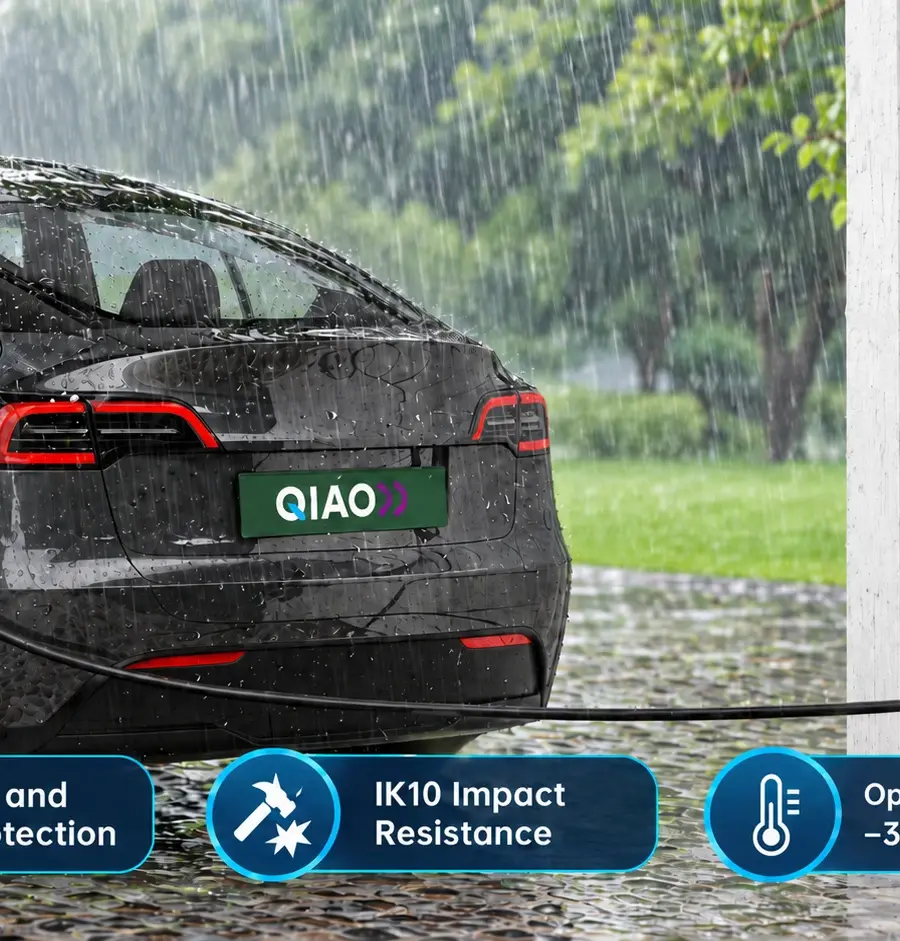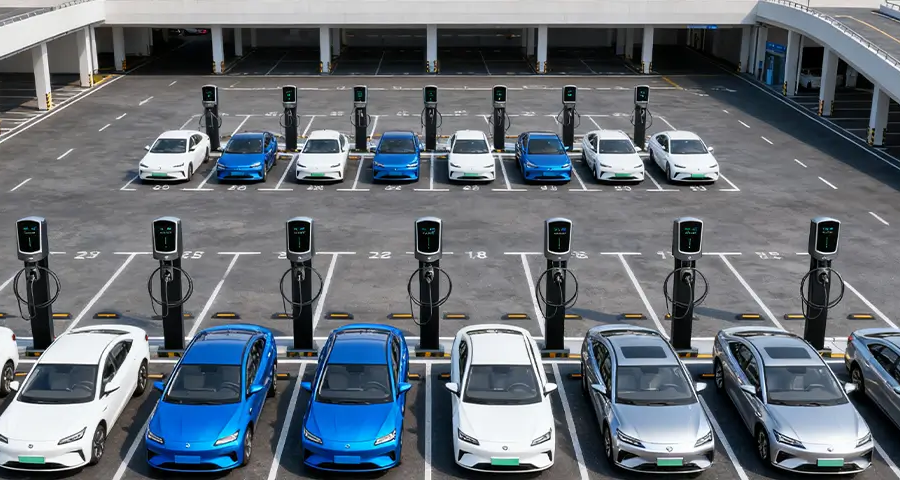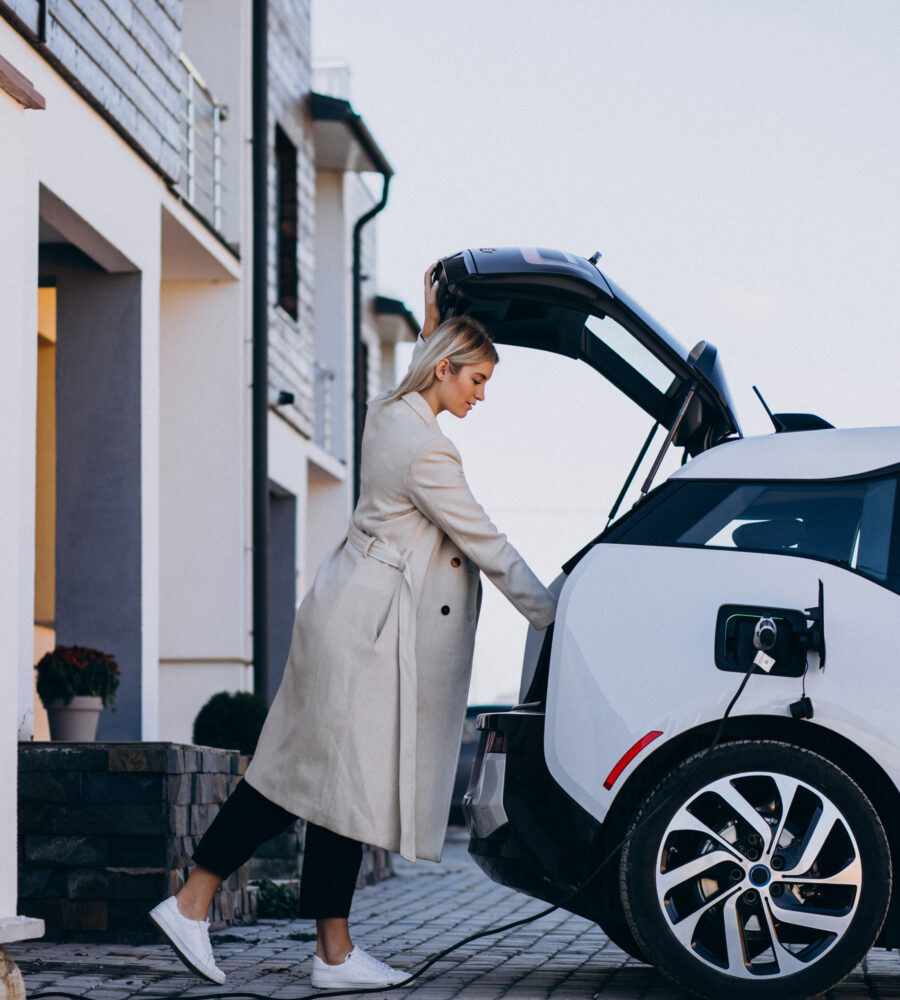

For most UK drivers with private off-street parking, a professionally installed 7kW charge point is the best place to start. It can replenish the energy used on a typical day overnight. Your final choice must still match your car, electrical supply, and parking space.
Renters and flat owners may need written permission before any work starts. Drivers without a driveway must check local rules for crossing the pavement. Private charge points sold for use in Great Britain must meet the applicable regulations. Buyers should request the Statement of Compliance for the exact model.
This guide compares 2.3kW, 7kW, 11kW, and 22kW charging. It also covers installation, costs, charging functions, grants, and buying checks.
UK Rules Note: This guide covers the United Kingdom, but some rules differ by nation. The smart charge point regulations apply in England, Scotland, and Wales, not Northern Ireland. Planning and building rules may also differ, so check the requirements for your location.
How Can You Charge an EV at Home in the UK?
You can charge an EV at home with a fixed wall-mounted charge point or a suitable portable charger connected to a circuit assessed for EV charging. Your parking situation will usually determine which option is practical.
| UK Home Situation | Recommended Starting Point | What to Confirm First |
| House With a Private Driveway | Fixed wall-mounted charger | Electrical capacity, cable route, and charger position |
| Home With a Garage | Fixed or suitable portable setup | Circuit, cable reach, door clearance, and charging-port position |
| Rented Home With Off-Street Parking | Fixed charger with permission | Landlord approval and grant eligibility |
| Flat With an Allocated Space | Shared or dedicated installation | Freeholder approval, parking rights, and metering |
| Home With On-Street Parking | Approved cross-pavement solution | Highway authority permission and parking availability |
| Occasional or Backup Charging | Suitable portable charger | Socket condition, circuit capacity, plug type, earthing, and current rating |
A driveway keeps the cable on private land. Renters need landlord consent, while flat owners may need freeholder or property manager approval.
Do not run a loose cable across a public pavement. A council may permit a fixed cable channel, but the channel does not reserve the space outside your home.
For a portable setup, the input plug must match a properly rated socket and circuit. Other factors in choosing a portable EV charger include adjustable current, cable length, weather protection, and documents for the intended market.
Is a 7kW Home Charger Enough in the UK?
For many UK drivers, a 7kW charger can replenish a typical day’s driving overnight. Usable speed depends on the car and property supply.
| Charging Option | Typical Supply | Best Used For | Main Limitation |
| Standard UK Socket | 230V household supply | Backup or occasional use | Often about 2.3kW when the cable is limited to 10A |
| 7kW Charger | 230V single-phase | Regular overnight charging | The vehicle may accept less power |
| 11kW Charger | Usually 400V three-phase | Compatible cars and three-phase homes | Many homes and cars cannot use the full output |
| 22kW Charger | 400V three-phase | High-mileage use with compatible cars | Needs three-phase power and a 22kW onboard charger |
A UK 13A socket is generally better suited to occasional or backup charging than routine high-mileage use. Before regular EV charging, ask a qualified electrician to check the socket, wiring, earthing, circuit protection, and sustained current capacity. Do not use a household extension lead or multi-plug adaptor.
The following table shows how much energy each power level could supply in 8 hours before charging losses:
| Nominal Charger Output | Energy Supplied in 8 Hours |
| 2.3kW | About 18kWh |
| 7kW | About 56kWh |
| 11kW | About 88kWh |
| 22kW | About 176kWh |
These are not full-charge times. Charging a 60kWh battery from 50% to 100% requires about 30kWh before charging losses. Cars may also reduce power near 100%.
Check Your Vehicle’s Onboard AC Charger
Your EV’s onboard charger sets its maximum AC power. These onboard charger limitations mean that a 22kW wallbox cannot make a car with a 7kW AC limit charge faster. Check the manufacturer’s specification before ordering.
Connector type is a separate check. Most current UK-market EVs use a Type 2 connector for AC charging, although some older or imported vehicles use Type 1.
Check Whether Your Home Has Single-Phase or Three-Phase Power
Most 7kW units use single-phase power. An 11kW or 22kW model normally needs three-phase power. Ask the installer to identify your supply and available capacity. Upgrade only when your car and driving pattern can use the extra output.
The choice between 7kW, 11kW, and 22kW home chargers also depends on charging time, installation requirements, vehicle limits, and whether the additional output will be used regularly.
What Should Be Checked Before a Home EV Charger Installation?
A home survey should cover parking, permissions, electrical supply, the consumer unit, earthing, cable route, and charger location. Complete the assessment before choosing or ordering a charger.

Confirm the Parking Space and Installation Permission
Homeowners can often install beside a private driveway, subject to local restrictions. Renters need written landlord approval. Flat owners may need consent even when their flat has an allocated bay.
Ask the local planning authority about listed buildings, conservation areas, and local restrictions. Rules differ across the four UK nations.
Ask the Installer to Check the Electrical Supply
An installer should record the following details during the home assessment:
- Main Fuse: Its rating shows how much current the property can draw.
- Consumer Unit: Its condition and spare capacity affect the circuit design.
- Available Capacity: Large loads include ovens, electric showers, and heat pumps.
- Earthing Arrangement: The installer must select suitable protection.
- Cable Route: Distance, drilling, paving, and groundworks affect the quote.
- Charger Position: The cable should reach the car without creating a trip hazard.
- Mobile or Wi-Fi Signal: Connected features need a dependable communication method.
Decide Whether You Need Dynamic Load Balancing
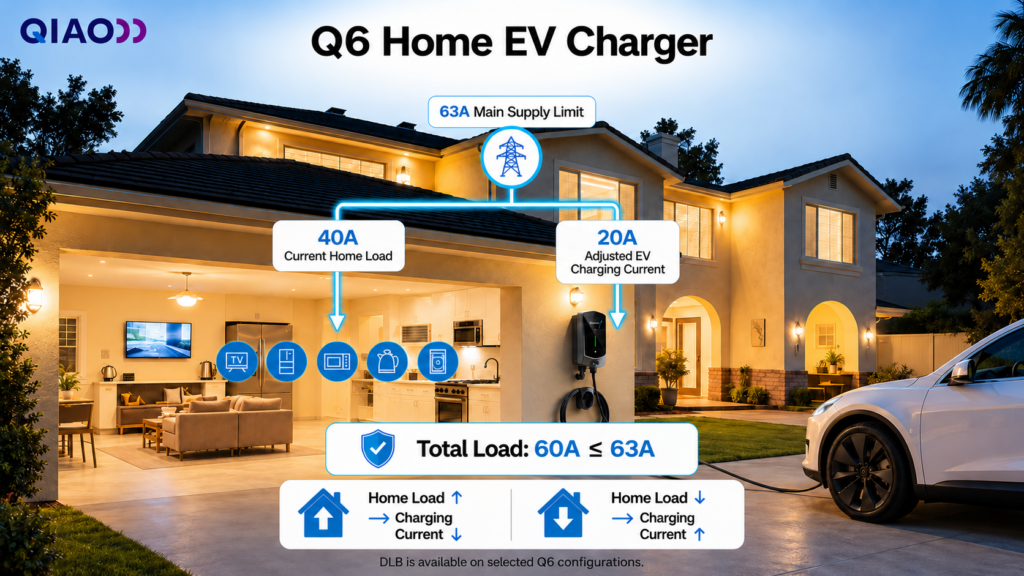
Dynamic load balancing lowers charging power when the home uses more electricity. It can help with limited capacity or several large appliances.
The QIAO Q6 Home EV Charger is available with optional DLB configurations that can adjust charging power in response to household demand. Feature availability varies by configuration, so confirm the exact specification before ordering.
Let the Installer Complete the DNO Process
Every new connection must follow the Distribution Network Operator process. The installer identifies the correct route.
The UK government’s energy device registration guidance states that Connect and Notify allows installation before the DNO receives the form, provided the installer submits it within 28 days. Apply to Connect requires DNO approval before installation begins.
Complete the Installation and Keep the Documents
Keep the electrical installation certificate, commissioning records, DNO evidence, manual, serial number, warranty, and applicable compliance statement.
Use an installer with suitable EV charging experience. An OZEV-authorised installer is required when you claim an eligible government charge point grant.
How Much Does It Cost to Charge an EV at Home in the UK?
Charging cost depends on grid energy and your price per kilowatt-hour. Installation cost depends on the equipment and property.
Separate Equipment Cost From Installation Cost
A quotation should list the charge point, cable length, drilling, groundworks, consumer unit work, protection, load balancing, and supply upgrades. Check for VAT, setup, testing, and certification.
There is no single UK installation price. Ask for an itemised, site-based quote.
Calculate the Cost of One Charging Session
Calculate a charging session with this formula:
Electricity Drawn From the Grid x Price per kWh = Charging Cost
For example, at the July–September 2026 average capped Direct Debit electricity rate of 26.11p/kWh for a standard variable tariff in Great Britain, adding 60kWh would cost about £15.67 before charging losses. Your tariff and regional rate may differ.
When starting with energy added to the battery, divide it by estimated charging efficiency to allow for losses.
Use Off-Peak Charging When It Fits Your Routine
An off-peak tariff may cut charging costs. Compare its cheap rate, peak rate, standing charge, hours, and eligibility. Some tariffs control a supported car or charger.
Check Current UK Charge Point Grants
The following home charging grants remain available to eligible applicants at the time of checking in September 2026:
| User Situation | Current Maximum Support to Check |
| Renter With Private Off-Street Parking | 75% of eligible cost, up to £500 |
| Flat Owner With an Allocated Space | 75% of eligible cost, up to £500 |
| Household With On-Street Parking | 75% of eligible cost, up to £500 |
| Private Homeowner With a Driveway | Usually no standard national homeowner grant |
| Residential Landlord | Up to £500 per eligible socket, subject to limits |
The government’s Electric Vehicle Chargepoint Grants lists five schemes running until 31 March 2027. Check again before applying.
Eligibility covers the applicant, property, parking, vehicle, approved model, installer, and timing. The on-street grant requires a permanent cross-pavement solution, not a temporary cover.
What Does Smart Charging Mean for UK Drivers?
Smart charging changes when or how fast an EV charges based on a schedule, household demand, price, or external signal.
Schedule Charging for Off-Peak Hours
Set when the car must be ready, then charge inside the lower-cost window. Use a boost or immediate-charge function if you need to leave earlier. Avoid conflicting schedules in the car and charger.
Monitor Charging and Energy Use
Connected models may show status, energy use, and charging history. Some allow remote control. Functions depend on the exact model and service.
Match Charging to Household Electricity Use
Dynamic load balancing adjusts charging power in response to the home’s total demand. PV charging adjusts it around available solar generation. These are separate functions, and neither term proves full regulatory compliance.
Check Great Britain Smart Charge Point Compliance
Private home and workplace charge points sold in Great Britain are covered by the regulations, subject to the stated exclusions. The government’s Smart Charge Point Regulations cover communication, off-peak defaults, randomised delay, metering, safety, supplier interoperability, cybersecurity, and continued charging if the charge point loses connection to a communications network.
Wi-Fi, Bluetooth, scheduling, app control, CE marking, or UKCA marking alone does not prove compliance. Ask the seller for the Statement of Compliance for the exact model. Grant approval is a separate check.
What Should You Check Before Buying a Home EV Charger?
Check the car, property, installation, functions, and documents before ordering:
- Confirm the Connector: Check whether the car needs Type 2 or an older Type 1 AC connection.
- Check the AC Limit: Match charger output to the vehicle’s onboard AC charger.
- Confirm the Home Supply: Ask the installer to identify single-phase or three-phase service.
- Choose the Rated Power: Base 7kW, 11kW, or 22kW on the car, supply, and driving pattern.
- Select the Connection: Use a hardwired connection, UK 13A plug, or suitable CEE input only where the socket, circuit, voltage, phase, and current rating support that configuration. A UK 13A input will not provide 7kW charging.
- Choose the Cable Format: A tethered unit includes a fixed cable; an untethered unit uses a separate cable.
- Measure the Cable Route: Park normally and measure to the vehicle’s charging port.
- Check the Functions: Confirm scheduling, app control, tariff support, load balancing, and PV charging by model.
- Review the Documents: Check which compliance and installation documents are required where you live.
- Read the Warranty: Confirm its length, exclusions, replacement process, and support contact.
One example of a unit designed for both home and portable use is the Q20 portable EV charger, available with fixed or interchangeable input options. The exact Type 2 configuration, plug, rated power, circuit requirements, and documents needed for Great Britain should be confirmed before ordering.
Plan Your UK Home Charging Setup
Start with a 7kW Type 2 wallbox assessment for a private driveway, single-phase supply, and normal daily mileage. Consider 11kW or 22kW only when the property and car support it. Renters and flat owners need permission first. Street parking needs local authority approval.
Check your car’s maximum AC input, then ask an experienced local installer to assess the supply and cable route. Explore QIAO’s home EV chargers and portable EV chargers. QIAO Charger supplies equipment to UK customers but does not provide installation, so arrange a site assessment with a qualified local electrician before ordering.