
Electric vehicle charging systems rely heavily on electrical safety and stable current transmission. Among all electrical protection mechanisms, grounding plays a critical role. When grounding is poor or unstable, EV chargers may stop charging, display faults, or even damage sensitive electronic components.
For EV charger operators, installers, and distributors, understanding grounding problems is essential to improving charging reliability and reducing maintenance costs.
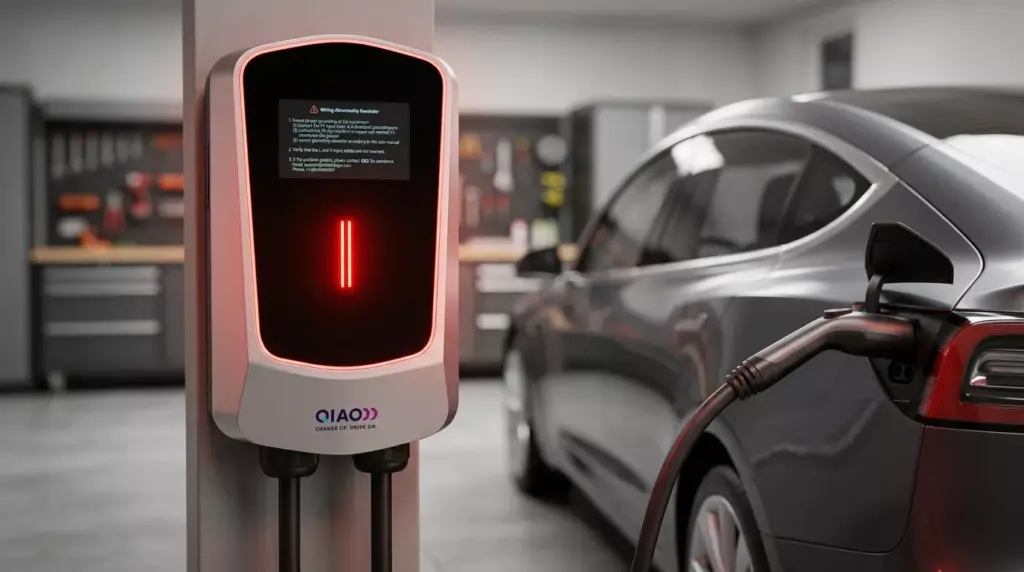
What Is Grounding in an EV Charging System?
Grounding (also called earthing) is a safety mechanism that directs excess electrical current safely into the ground. In EV charging systems, grounding helps:
- Protect users from electric shock
- Stabilize voltage during charging
- Reduce electrical interference
- Enable leakage protection devices to function correctly
- Protect EV charger internal circuits
Without proper grounding, the charger may detect unsafe electrical conditions and automatically stop charging.
Common Symptoms of Poor Grounding
Here are some common signs that grounding issues may be affecting an EV charger:
| Symptom | Possible Cause |
|---|---|
| Charger starts then stops | Ground fault detected |
| Charging fails immediately | Ground resistance too high |
| Frequent leakage protection trips | Unstable grounding |
| Vehicle cannot recognize charger | Communication interference |
| Error code on charger display | Electrical safety protection triggered |
Many AC EV chargers include built-in protection systems. If grounding conditions do not meet safety standards, the charger will refuse to operate.
Why Poor Grounding Leads to Charging Failure
1. Leakage Protection Is Triggered
Modern EV chargers use residual current devices (RCDs) or leakage protection systems. These systems continuously monitor electrical balance.
If grounding is poor, even small leakage currents may be interpreted as dangerous, causing the charger to shut down automatically.
2. Voltage Becomes Unstable
A stable ground helps maintain voltage reference levels. Poor grounding can cause:
- Voltage fluctuation
- Communication instability
- Charging interruptions
- Control board malfunction
This is especially common in older buildings or industrial areas with outdated electrical infrastructure.
3. Communication Between EV and Charger Fails
EV charging is not simply power delivery. The vehicle and charger constantly exchange signals to confirm charging conditions.
Poor grounding may introduce electromagnetic interference (EMI), which affects signal communication between:
- EV battery management system (BMS)
- Charging control module
- AC charging connector
As a result, the charging session may fail during initialization.
4. Safety Standards Are Not Met
Most countries require EV charging installations to comply with grounding and electrical safety standards.
For example:
| Region | Typical Grounding Requirement |
| Europe | TN/TT grounding systems |
| North America | NEC grounding compliance |
| Southeast Asia | Local electrical code compliance |
| Commercial sites | Dedicated grounding protection |
If grounding resistance exceeds acceptable limits, charging equipment may not pass inspection or certification.
How to Fix Grounding Problems
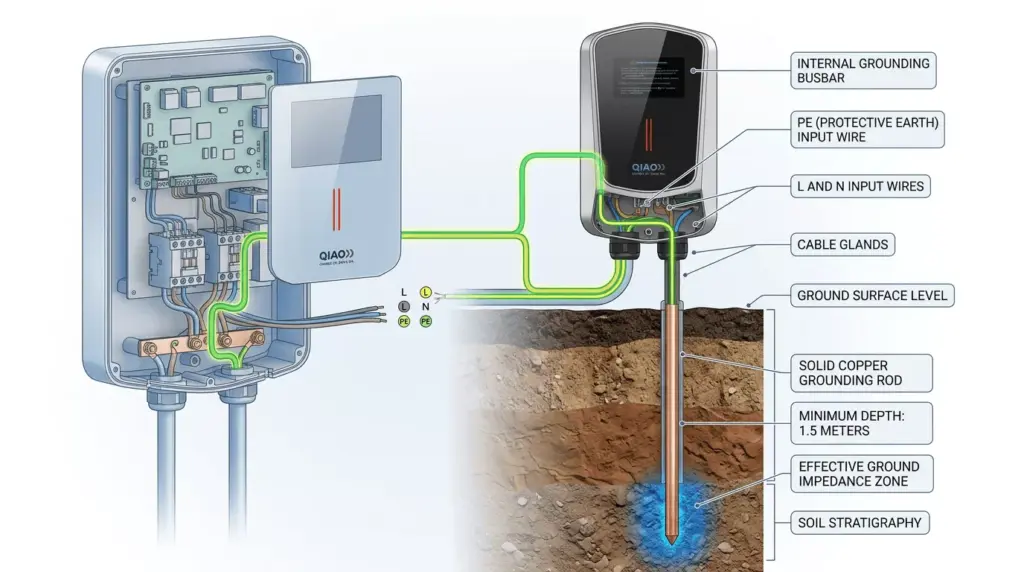
Check Ground Resistance
Use professional testing equipment to measure grounding resistance. In many commercial applications, resistance should remain below acceptable safety thresholds.
Inspect Wiring Connections
Loose, corroded, or damaged grounding wires can create unstable electrical paths.
Key inspection areas include:
- Distribution panel
- Grounding terminal
- EV charger internal connection
- Cable joints
Upgrade Electrical Infrastructure
Older facilities may require:
- New grounding rods
- Improved distribution systems
- Dedicated charging circuits
- Surge protection devices
This is especially important for commercial EV charging deployments.
Use Certified EV Chargers
High-quality chargers include advanced protection systems capable of identifying grounding abnormalities quickly and accurately.
Reliable EV charger manufacturers also provide technical support for grounding configuration and installation guidance.
Why Grounding Matters for Commercial EV Charging Projects
For B2B charging projects, grounding problems can lead to:
- Increased maintenance costs
- Customer complaints
- Charging downtime
- Equipment failure
- Reduced charger lifespan
Whether operating hotels, parking lots, office buildings, or fleet charging stations, stable grounding directly impacts operational reliability.
Conclusion
Poor grounding is one of the most common causes of EV charging failure. It affects charger safety, communication stability, and electrical protection systems.
Proper grounding not only ensures safe charging but also improves charger performance and long-term reliability.
As a professional AC EV charger manufacturer, QIAO provides reliable and safety-focused charging solutions for global B2B customers, including:
- Home EV charging solutions
- Portable & Home EV charging solutions
- Commercial EV charging solutions
- AC EV charger wholesale
- ODM EV charger manufacturing
- EV charger distributor support
Choosing high-quality EV charging equipment and proper electrical installation helps reduce failures and improve charging efficiency for long-term commercial operations.